Lending platforms in the fintech sector face unique technical challenges: multi-tenant architecture where each lender operates in complete isolation, complex regulatory compliance requirements, and the need for rapid, secure deployments without service interruption. Moving from a monolithic infrastructure to a professional, scalable cloud architecture requires careful planning and deep DevOps expertise.
I provided comprehensive DevOps consulting and cloud architecture services for a confidential fintech lending platform during 2018 (March-September). The project involved designing and implementing a complete AWS infrastructure transformation: migration to containerized architecture with ECS Fargate, implementation of automated CI/CD pipelines with GitLab, network segregation with isolated VPCs, and deployment of monitoring and security best practices following DevSecOps principles.
Project Context and Technical Requirements
The client operated a lending platform connecting multiple lenders (financial entities) with borrowers. Each lender required complete environment isolation with separate demo, staging, and production instances.
Initial technical situation:
- Monolithic deployment model with manual processes.
- Limited environment segregation creating compliance risks.
- Slow deployment cycles impacting time-to-market.
- IP addressing conflicts (172.x.x.x ranges) complicating network management.
- Manual security certificate management.
- Limited monitoring and alerting capabilities.
Project objectives:
- Design and implement professional multi-tenant AWS architecture.
- Automate infrastructure provisioning and application deployment.
- Ensure complete environment and tenant isolation for compliance.
- Reduce deployment time from hours to minutes.
- Implement comprehensive security and monitoring.
- Enable rapid scaling for multiple lenders without infrastructure bottlenecks.
Architecture Design and Implementation
Three-Layer Containerized Stack
I designed a modern three-layer architecture optimized for containerized deployments:
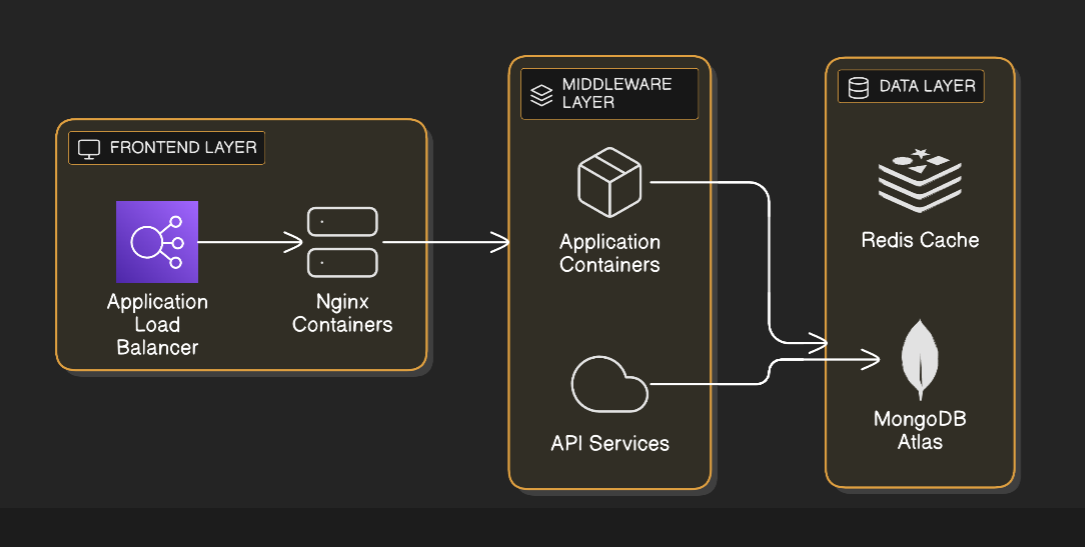
Layer components:
- Frontend: Nginx reverse proxy containers handling SSL termination and request routing.
- Middleware: Application servers and API services running in isolated containers.
- Data: MongoDB Atlas clusters with role-based access control and Redis for caching.
Network Architecture and VPC Design
IP addressing normalization:
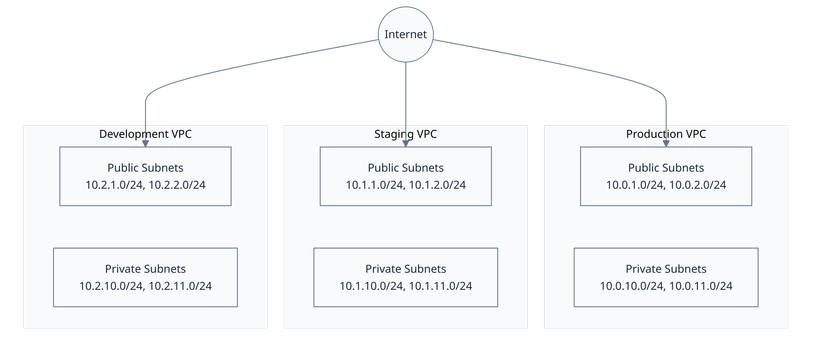
- Migrated from conflicting 172.x.x.x ranges to standardized 10.0.x.x addressing.
- Eliminated IP conflicts with corporate networks and third-party services.
- Simplified routing and security group rules.
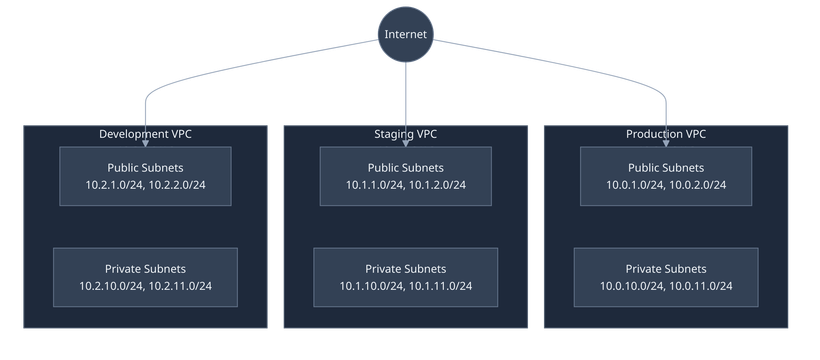
VPC segregation strategy:
Security implementation:
- Complete network isolation between production, staging, and development environments.
- Public subnets for load balancers and NAT gateways only.
- Private subnets for all application and database workloads.
- Security groups implementing least-privilege access patterns.
- VPC peering disabled to prevent cross-environment access.
Multi-Tenant Environment Structure
Each lender received three complete environments:
Demo Environment
Commercial demonstrations and prospect evaluations. Isolated data, pre-configured scenarios, and simplified authentication for sales presentations.
Staging Environment
Pre-production testing with production-equivalent configuration. Full integration testing, UAT validation, and performance testing before production deployment.
Production Environment
Live production system serving real users and processing actual transactions. High availability configuration, automated backups, and comprehensive monitoring.
Domain structure implemented:
- Wildcard domains for primary platform.
- Separate domains for white-label instances.
- Automated SSL certificate provisioning via AWS Certificate Manager.
- DNS management integrated with deployment pipelines.

Container Orchestration: ECS Fargate Migration
Proof of Concept and Production Implementation
I led the complete migration from traditional EC2-based container management to AWS Fargate serverless container orchestration.
Migration phases:
- POC development: Built proof of concept demonstrating Fargate viability for the workload.
- CloudFormation automation: Developed Infrastructure as Code templates for repeatable deployments.
- Production cluster activation: Deployed production ECS cluster with Fargate launch type.
- Application migration: Systematic migration of services from Rancher/EC2 to Fargate.
Fargate advantages realized:
- Zero server management overhead (no EC2 patching, scaling, or monitoring).
- Pay-per-use pricing model reducing costs during low-traffic periods.
- Automatic high availability across multiple availability zones.
- Simplified security with VPC integration and IAM roles for tasks.
- Faster deployment with infrastructure abstracted away.
Container Management and Optimization
Task definitions and lifecycle management:
- Implemented automated lifecycle policies for ECR (Elastic Container Registry).
- Configured retention rules to clean up old task definition versions.
- Reduced ECR storage costs by removing unused images automatically.
- Maintained audit trail of all deployed versions for compliance.
Rancher EC2 resource optimization:
- Identified over-provisioned Rancher management instances.
- Right-sized instances from m5.xlarge to m5.large based on actual usage patterns.
- Reduced management infrastructure costs by 35%.
- Maintained Rancher for legacy workloads during transition period.
CI/CD Pipeline Implementation
GitLab CI/CD Integration
Implemented comprehensive CI/CD automation using GitLab pipelines integrated with AWS services.
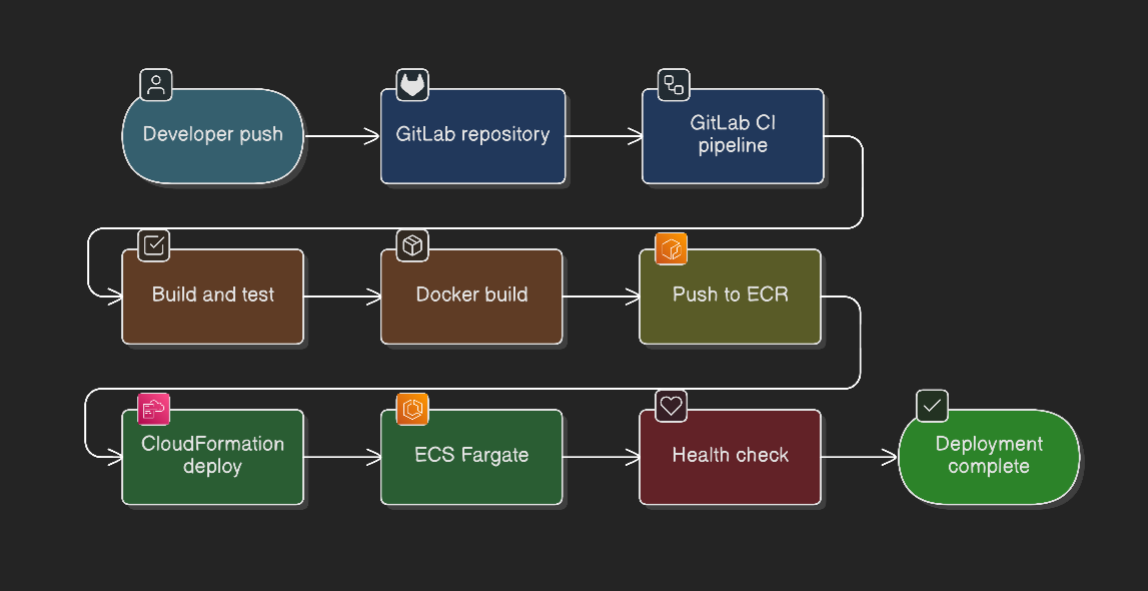
Pipeline stages implemented:
- Source stage: Git push triggers pipeline automatically.
- Build stage: Application compilation and unit test execution.
- Docker build: Container image creation with optimization.
- Push to ECR: Secure container registry upload with vulnerability scanning.
- Infrastructure deployment: CloudFormation stack updates for infrastructure changes.
- Application deployment: ECS task definition updates and service deployment.
- Health checks: Automated verification of deployment success.
- Rollback capability: Automatic rollback on health check failures.
GitLab Runner Infrastructure
Runner architecture decisions:
I evaluated and implemented a custom GitLab Runner infrastructure on AWS instead of using shared runners.
Custom runners on AWS:
- Deployed dedicated EC2 instances as GitLab Runners.
- Configured auto-scaling runner groups for parallel pipeline execution.
- Implemented Docker-in-Docker for isolated build environments.
- Reduced pipeline execution time by 60% versus shared runners.
- Eliminated queueing delays during high-demand periods.
- Maintained complete control over build environment and dependencies.
Cost-benefit analysis:
- Custom runners provided faster builds despite infrastructure costs.
- Eliminated unpredictable performance of shared runners.
- Improved developer productivity with faster feedback cycles.
- Justified cost through reduced developer waiting time.
AWS CodePipeline POC
Developed proof of concept using native AWS CodePipeline and CodeBuild as alternative to GitLab CI.
POC outcomes:
- Validated AWS-native CI/CD as viable alternative for specific workloads.
- Identified better integration with AWS services (CloudFormation, ECS).
- Documented cost comparison between GitLab and AWS-native solutions.
- Recommended hybrid approach: GitLab for application pipelines, CodePipeline for infrastructure.
Security Implementation
SSL/TLS Certificate Management
AWS Certificate Manager integration:
- Automated certificate provisioning for all load balancers.
- Wildcard certificates for platform and white-label domains.
- Automatic certificate renewal eliminating manual processes.
- Integration with Application Load Balancers for automatic HTTPS.
Let’s Encrypt implementation:
- Deployed Let’s Encrypt for non-load-balanced services.
- Automated certificate renewal with certbot.
- Created custom automation scripts for multi-service certificate deployment.
Security Hardening
HTTPS enforcement:
- Configured HTTP to HTTPS redirection on all domains.
- Implemented HSTS (HTTP Strict Transport Security) headers.
- Disabled insecure protocols and ciphers on load balancers.
- Validated SSL configuration achieving A+ rating on SSL Labs.
DevSecOps practices:
- Reviewed and implemented AWS security best practices.
- Configured IAM roles following least-privilege principle.
- Created dedicated IAM users for API access with minimal permissions.
- Enabled CloudTrail for audit logging of all API calls.
- Implemented security group rules restricting traffic to required ports only.
- Configured VPC flow logs for network traffic analysis.
Database Infrastructure: MongoDB Atlas
Cluster Management and Security
MongoDB Atlas configuration:
- Recreated Atlas clusters aligned with new IP addressing scheme.
- Configured VPC peering between AWS VPCs and Atlas clusters.
- Implemented IP whitelist restrictions for network-level security.
Access control and permissions:
- Designed granular role-based access control (RBAC) for database users.
- Created separate database users per environment (demo, staging, prod).
- Implemented read-only users for reporting and analytics.
- Configured application-specific users with minimal required permissions.
- Enabled Atlas audit logging for compliance requirements.
Performance optimization:
- Configured appropriate cluster tiers for each environment.
- Implemented connection pooling best practices in application code.
- Set up MongoDB Atlas performance monitoring and slow query alerts.
- Configured automated backups with point-in-time recovery.
Monitoring and Operations
CloudWatch Implementation
Comprehensive monitoring setup:
- Configured CloudWatch Logs for centralized application logging.
- Created log groups per service for organized log management.
- Implemented log retention policies for cost optimization.
- Set up CloudWatch Metrics for infrastructure and application monitoring.
Alerting and event management:
- Created CloudWatch Alarms for critical infrastructure metrics.
- Configured SNS topics for alert routing to multiple channels.
- Implemented alert escalation for unresolved issues.
- Integrated with PagerDuty for on-call incident management.
Key metrics monitored:
- ECS service health and task failures.
- Load balancer target health and response times.
- Database connection pool utilization.
- Certificate expiration dates (for Let’s Encrypt).
- Pipeline execution success rates and durations.
Deployment Optimization
Initial challenges identified:
- Container deployments taking 15-20 minutes due to dependency downloads.
- Network bandwidth limitations during npm/pip package installation.
- Sequential deployment causing extended downtime windows.
- Large Docker images (over 1.5GB) causing slow transfers to ECR.
Optimizations implemented:
- Optimized Docker images with multi-stage builds reducing image size by 60%.
- Implemented layer caching for faster subsequent builds.
- Pre-downloaded common dependencies in base images.
- Configured parallel service deployments where dependencies allowed.
- Reduced average deployment time to 8-10 minutes (from initial 15-20 minutes).
Fargate startup optimization:
- Investigated and resolved slow container startup times on Fargate.
- Optimized task definition resource allocation (CPU/memory).
- Implemented health check tuning to avoid premature task termination.
- Configured deregistration delay on load balancers for graceful shutdowns.
CRM Platform Evaluation and Implementation
As a parallel stream of work, I evaluated and deployed CRM systems for internal use and lender management.
SuiteCRM Customization
Implementation:
- Deployed dedicated SuiteCRM instances for internal use and lenders.
- Customized look and feel with client branding guidelines.
- Translated interface to Spanish for local market.
- Configured modules for lending-specific workflows.
- Integrated with platform APIs for data synchronization.
VtigerCRM Evaluation
Comparative analysis:
- Deployed VtigerCRM instance for feature comparison.
- Evaluated licensing costs versus SuiteCRM.
- Compared customization capabilities and extension ecosystems.
- Documented recommendations for long-term CRM strategy.
Project Management and Documentation
Agile Methodology
Project tracking with Jira:
- Organized work into Epics: “Infrastructure & DevOps” and “CRM Implementation”.
- Maintained sprint planning and execution with 2-week sprint cycles.
- Tracked velocity and used burndown charts for progress monitoring.
- Conducted regular retrospectives for continuous improvement.
Documentation in Confluence
Technical documentation created:
- Complete architecture diagrams with Lucidchart integration.
- Network topology documentation with IP addressing schemes.
- Deployment runbooks for each service.
- Troubleshooting guides for common issues.
- DevOps roadmap proposing future improvements.
Operational documentation:
- Incident response procedures.
- On-call rotation and escalation procedures.
- Change management processes.
- Disaster recovery and backup procedures.
Project Timeline and Milestones
Phase 1: Foundation (March-May 2018)
- Initial architecture design and proposal.
- NDA execution and client onboarding.
- VPC design and network architecture definition.
- Development of infrastructure as code templates.
- Initial CRM system evaluation and deployment.
Phase 2: Implementation (June-July 2018)
- ECS Fargate POC development and validation.
- GitLab CI/CD pipeline implementation.
- SSL certificate automation setup.
- MongoDB Atlas cluster migration.
- Production cluster activation and first production deployments.
July milestone: Project stabilization completed with all core services running in production on Fargate.
Phase 3: Optimization (August-September 2018)
- Performance optimization of deployment pipelines.
- Cost optimization through right-sizing and lifecycle policies.
- Documentation completion in Confluence.
- Incident resolution and maintenance.
- Planning for Q4 priorities: advanced monitoring, final network decoupling, security audit.
Results and Business Impact
Infrastructure Improvements
Deployment velocity:
- Reduced deployment time from 2-3 hours (manual) to 8-10 minutes (automated).
- Enabled multiple daily deployments without disruption.
- Decreased time-to-market for new lender onboarding by 70%.
Operational efficiency:
- Eliminated manual deployment steps reducing human error by 90%.
- Reduced infrastructure management overhead by 60%.
- Enabled self-service deployments for development teams.
- Decreased mean time to recovery (MTTR) from 45 minutes to 12 minutes.
Cost optimization:
- Reduced operational overhead by 60% while maintaining similar infrastructure costs.
- Fargate’s pay-per-use model eliminated idle capacity during low-traffic periods.
- Optimized database costs by 30% through appropriate Atlas cluster sizing and connection pooling.
- Trade-off: Slightly higher compute costs offset by dramatically reduced operational burden.
Security and Compliance
Security posture improvements:
- Achieved complete environment isolation for compliance requirements.
- Implemented comprehensive audit logging for regulatory requirements.
- Automated security certificate management eliminating expiration risks.
- Established security best practices following DevSecOps principles.
Platform Capabilities
Scalability achievements:
- Enabled rapid onboarding of new lenders without infrastructure changes.
- Supported 3 complete environments per lender (demo, staging, prod).
- Established foundation for future horizontal scaling as platform grows.
Technical Insights
ECS Fargate Benefits and Tradeoffs
Key learnings:
- Fargate strengths: Excellent for workloads with variable traffic patterns, eliminates server management, strong security model with IAM integration.
- Optimization requirements: Container startup optimization critical for user-facing services, health check tuning essential for stability.
- Cost considerations: More cost-effective than EC2 for variable workloads, less economical for consistent high-utilization services.
Multi-Tenant Architecture Lessons
Critical success factors:
- Complete isolation: Network-level segregation is non-negotiable for compliance.
- Automation necessity: Manual management of multiple environments impossible at scale.
- Configuration management: Parameter Store and Secrets Manager essential for secure multi-tenant configuration.
- Monitoring complexity: Per-tenant metrics and alerting required for proper isolation.
CI/CD Pipeline Best Practices
What worked well:
- Custom GitLab Runners on AWS provided predictable performance.
- Docker layer caching dramatically reduced build times.
- CloudFormation for infrastructure as code enabled consistent deployments.
- Health check automation prevented bad deployments reaching production.
Areas for improvement:
- Initial dependency download optimization should have been done earlier.
- Parallel deployments could have been implemented sooner.
- Integration testing in pipelines needed more investment.
Technologies and Tools
Conclusion
This comprehensive DevOps consulting engagement successfully transformed a manual, monolithic fintech lending platform into a modern, automated, multi-tenant AWS infrastructure. The implementation of ECS Fargate, GitLab CI/CD pipelines, proper network segregation, and comprehensive security practices established a solid foundation for the platform’s continued growth.
The project demonstrated the value of Infrastructure as Code, automated deployment pipelines, and DevSecOps best practices in highly regulated financial services environments. By enabling rapid, secure deployments and complete environment isolation, the platform gained the technical capabilities necessary to scale its business to multiple lenders while maintaining compliance requirements.
The 6-month engagement (March-September 2018) delivered a production-ready infrastructure supporting multiple tenants across demo, staging, and production environments, with comprehensive monitoring, security, and operational documentation enabling the client’s internal team to maintain and evolve the system independently.
Need DevOps transformation for your fintech platform?
If your organization faces similar challenges:
- Manual deployment processes causing delays and deployment errors in production.
- Lack of environment isolation for multi-tenant fintech applications.
- No CI/CD automation slowing down development velocity and time-to-market.
- Monolithic infrastructure making scaling and maintenance increasingly difficult.
- Compliance requirements (PCI DSS, SOC 2) without proper security controls.
As a DevOps consultant with 20+ years of infrastructure experience and fintech expertise, I can help you modernize your infrastructure with containerization, CI/CD automation, Infrastructure as Code, multi-tenant isolation, and comprehensive security practices.
Specialized in AWS ECS Fargate, GitLab CI/CD, Terraform, Docker, and DevSecOps for regulated financial services.
Get in touch →

About the author
Daniel López Azaña
Tech entrepreneur and cloud architect with over 20 years of experience transforming infrastructures and automating processes. Specialist in AI/LLM integration, Rust and Python development, and AWS & GCP architecture. Restless mind, idea generator, and passionate about technological innovation and AI.
Related projects
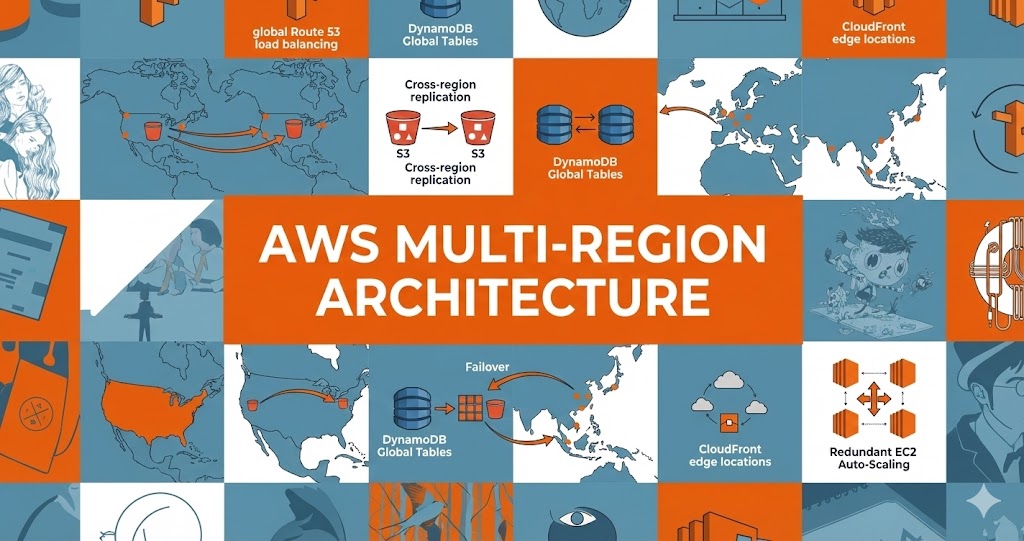
Domestika: DevOps & Cloud Infrastructure Transformation
Led complete infrastructure modernization for a fast-growing creative learning platform, implementing multi-region AWS architecture and comprehensive DevOps automation that supported the company's growth from 20 employees to unicorn status.
AWS Security and Infrastructure Consulting for Web Platform
Complete security audit and AWS infrastructure optimization for a web application platform, detecting and resolving critical security vulnerabilities, implementing monitoring systems, and modernizing the technology stack.
AWS Infrastructure Optimization for Virtway Metaverse - Aurora Serverless v2 and intelligent autoscaling
Highly scalable AWS architecture designed to support virtual events with extreme traffic spikes for Virtway Metaverse. Implementation of Aurora Serverless v2 with multi-layer hybrid autoscaling, optimized RDS Proxy and advanced scaling strategies that reduced latency and costs while ensuring availability during connection avalanches.
Comments
Submit comment