Project Overview
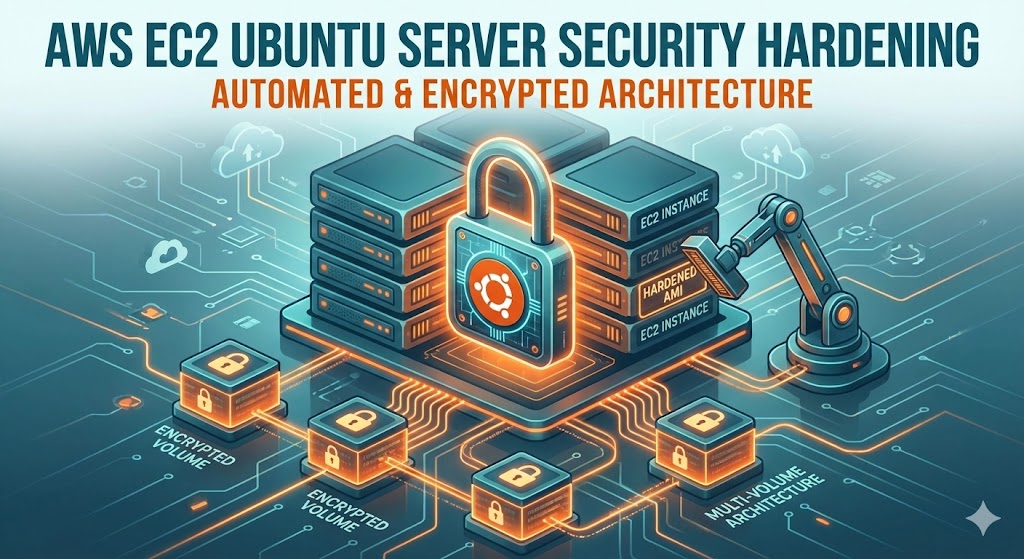
Over nearly a decade (2016-2025), I have developed and implemented a comprehensive security hardening solution for AWS EC2 Ubuntu servers serving multiple production environments. This project addresses the critical need for secure, stable, and maintainable infrastructure through automated AMI creation processes that enforce strict security controls from the operating system level up.
Confidentiality note:
Due to the confidential nature of client engagements, specific implementation details, customer environments, and proprietary configurations are not disclosed. The information presented focuses on general technical approaches and security principles applicable across multiple production deployments.
The solution focuses on implementing a multi-volume encrypted architecture as the foundation for security and operational stability, complemented by system-level hardening, access controls, and monitoring capabilities. This approach enables rapid deployment of consistently secured servers across multiple client environments while maintaining strict separation of concerns at the filesystem level.
Business Challenge
Organizations running critical applications on AWS EC2 require infrastructure that balances security, performance, and operational efficiency. Several key challenges emerged across multiple client projects:
The solution needed to provide a repeatable, automated process for deploying hardened Ubuntu servers that enforce security best practices by design, not as an afterthought.
Technical Solution
Multi-Volume Encrypted Architecture
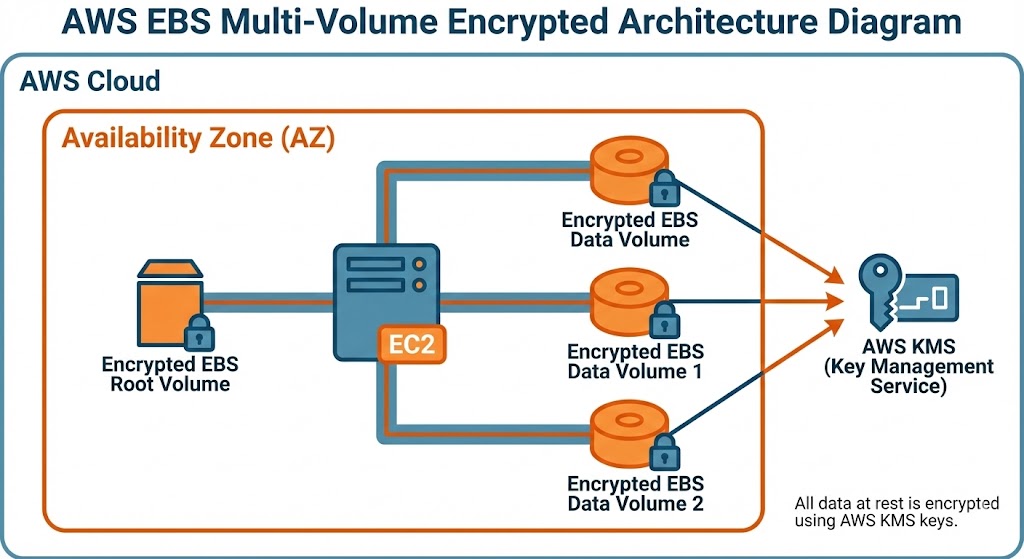
The cornerstone of this security approach is proper disk partitioning with encrypted, separated volumes for different filesystem purposes. This architecture provides both security and operational resilience by isolating different types of data and processes.
As detailed in my blog post The Importance of Proper Disk Partitioning in Linux, separating filesystems into dedicated volumes provides critical benefits:
Standard Volume Layout:
| Volume | Purpose | Mount Options | Server Type |
|---|---|---|---|
| / | Root filesystem | defaults,discard,noatime,errors=remount-ro | All |
| /boot | Boot partition | defaults,noatime | All |
| /home | User directories | defaults,noatime,acl,user_xattr,nodev,nosuid | All |
| /usr | Applications | defaults,noatime,nodev,errors=remount-ro | All |
| /var | Variable data | defaults,noatime,nodev,nosuid | All |
| /tmp | Temporary files | tmpfs,defaults,nodev,noexec,nosuid,size=512m | All |
| swap | Memory management | sw | All |
| /var/www | Web data | defaults,noatime,acl,user_xattr,nodev,nosuid | Web servers |
| /var/lib/db | Database storage | defaults,noatime,nodev,nosuid | Database servers |
Key Security Features:
This architecture is implemented through automated AWS EBS volume creation, attachment, partitioning, formatting, data synchronization, and /etc/fstab configuration during AMI build process.
System Hardening Components
Beyond disk architecture, the solution implements comprehensive system-level security controls:
SSH Security Hardening
- Disable password authentication (key-based only)
- Disable root login
- Configure
AllowUserswhitelist for authorized accounts - Custom SSH keep-alive settings for session management
- Restrict environment variable acceptance
- Key-based authentication with strong cryptographic keys: RSA 4096-bit initially, migrating to Ed25519 keys for enhanced security (stronger encryption with smaller key sizes, faster operations, and better resistance to side-channel attacks thanks to elliptic curve cryptography)
User and Access Management
- Rename default
ubuntuuser to customer-specific admin account - Configure role-based sudo access with logging
- Set strong root password (though root login disabled via SSH)
- Generate customer-specific SSH keys for automated tasks
Package Management and System Utilities
Installation of essential security and monitoring tools:
fail2banfor intrusion preventionaclfor advanced file permissions- System monitoring tools (
htop,sysstat,goaccess) - Network diagnostic utilities (
traceroute,net-tools) - Security utilities (
policycoreutils)
Shell and Environment Configuration
- Install and configure
zshwithoh-my-zshfor admin users - Enhanced shell history with timestamps (
HISTTIMEFORMAT) - Increased history size for audit trail
- Custom
vimconfiguration as default editor - Command-line efficiency improvements
Service-Specific Hardening
Tailored security configurations based on server role:
Bastion/Jumpbox Servers
- Integration with Advanced Bastion Host project
- Two-factor authentication (Google Authenticator)
- Chrooted SFTP for file transfers
- Enhanced sudo logging with sudoreplay
Web Servers
- Apache security (hide version, disable signatures)
- PHP hardening (expose_php = Off)
- Custom Apache run user (not www-data)
- JSON-formatted logs for analysis
- Git-based configuration management
Database Servers
- Dedicated encrypted volume for data
- Database-specific user creation
- Optimized mount options for performance
Backup Servers
- Restricted sudo access for backup operations
- Automated backup scripts with logging
- Secure key-based authentication for rsync
Automated AMI Build Process
All security configurations are codified in automated Bash scripts that:
- Stop the source EC2 instance
- Create and attach encrypted EBS volumes
- Partition, format, and mount new volumes
- Synchronize data from root volume to appropriate partitions
- Generate optimized
/etc/fstabconfiguration - Apply all security hardening steps
- Create snapshots and build new AMI
- Verify and tag the resulting AMI
This approach ensures:
- Consistency: Every server built from the AMI has identical security posture
- Repeatability: New environments can be deployed rapidly with confidence
- Version control: AMIs are versioned and can be rolled back if needed
- Audit trail: AWS tracks all AMI creation and usage
Configuration Management Integration
The solution integrates with AWS CodeCommit for version-controlled configuration management:
- Apache virtual host configurations stored in Git
- PHP pool configurations under version control
- Custom scripts and configurations tracked and deployed automatically
- Infrastructure-as-code approach for server configurations
Additional Security Layers
Beyond the core hardening measures, the solution incorporates additional security controls that provide defense-in-depth protection:
Automatic Security Updates
- Unattended security patches: Configure automatic installation of critical security updates
- Staged rollout strategy: Test updates on non-production instances before applying to production
- Reboot management: Controlled instance restarts when kernel updates require them
- Update monitoring: Track installed patches and maintain update history for compliance
Kernel-Level Hardening
System kernel parameters (sysctl) hardened for enhanced security:
- Network security: IP forwarding controls, SYN flood protection, ICMP redirect prevention
- Memory protection: Address space layout randomization (ASLR), kernel pointer protection
- Core dump restrictions: Prevent sensitive data exposure through core dumps
- Process isolation: Enhanced ptrace restrictions to prevent process debugging attacks
Network Security and Firewall
Multi-layered network security approach (see my comprehensive AWS Network Security Architecture project for full implementation details):
- Host-based firewall: iptables/nftables rules for granular port and protocol control
- AWS Security Groups: Cloud-level firewall integrated with instance-level controls
- VPC network segmentation: Isolation of different server roles in separate subnets
- Egress filtering: Restrict outbound connections to prevent data exfiltration
File Integrity Monitoring
Detection of unauthorized filesystem modifications:
- Baseline creation: Establish cryptographic hashes of critical system files
- Scheduled verification: Regular scans to detect unauthorized changes
- Alert generation: Immediate notification of integrity violations
- Compliance support: Maintain audit trails for security compliance requirements
Centralized Logging and Monitoring
Comprehensive observability and security event tracking:
- CloudWatch integration: System and application logs forwarded to AWS CloudWatch
- Log retention policies: Configurable retention periods for compliance requirements
- Real-time alerting: Automated notifications for critical security events
- SIEM integration: Support for forwarding logs to Security Information and Event Management systems
- Audit log protection: Immutable log storage prevents tampering
Rootkit and Malware Detection
Proactive threat detection capabilities:
- Rootkit scanners: Regular scans for known rootkits and backdoors
- Binary integrity verification: Detect trojaned system binaries
- Malware signature updates: Automatic updates of threat detection databases
- Scheduled scanning: Automated security scans during low-traffic periods
Backup and Disaster Recovery
Automated backup strategy for data protection:
- EBS snapshot automation: Scheduled snapshots of all data volumes
- Cross-region replication: Geographic redundancy for critical data
- Backup verification: Automated tests to ensure backup integrity
- Point-in-time recovery: Ability to restore to any snapshot timestamp
- Retention management: Automated cleanup of old snapshots per policy
AWS Systems Manager Integration
Centralized management and security:
- Session Manager: Secure shell access without SSH key distribution
- Patch Manager: Automated patch baseline enforcement
- Parameter Store: Secure storage for configuration values and secrets
- Systems Manager Agent: Automated inventory and compliance reporting
- Run Command: Remote execution capabilities for operational tasks
Compliance and Audit Support
Built-in compliance framework support:
- CIS Benchmark alignment: Configuration follows Center for Internet Security guidelines
- PCI-DSS considerations: Payment Card Industry compliance support
- HIPAA security controls: Healthcare data protection measures where applicable
- SOC 2 evidence collection: Audit trail generation for SOC 2 compliance
- Automated compliance scanning: Regular assessment against security baselines
Implementation Results
This security hardening solution has been successfully deployed across multiple production environments since 2019, serving various industries including finance, e-commerce, healthcare, and SaaS platforms.
Key Outcomes:
- Zero filesystem-related outages due to partition isolation
- Consistent security posture across all deployed environments
- Rapid environment provisioning: New secure servers deployed in minutes, not hours
- Simplified compliance auditing: Security controls built into base infrastructure
- Reduced attack surface: Multi-layered security prevents common exploitation vectors
- Enhanced disaster recovery: Volume-level backups enable granular restoration
Security Improvements:
- Prevented lateral movement in potential breach scenarios through filesystem isolation
- Eliminated risk of log-based denial of service attacks
- Protected against temporary file exploitation with
noexecmounts - Enforced least-privilege access through role-based user management
- Created comprehensive audit trails for access and configuration changes
Technical Expertise Demonstrated
This project showcases expertise in:
- AWS Infrastructure: EC2, EBS, AMI, snapshots, encryption at rest
- Linux System Administration: Advanced filesystem management, security hardening, user/permission management
- Security Engineering: Defense in depth, principle of least privilege, secure defaults
- Automation and DevOps: Infrastructure as code, repeatable deployments, configuration management
- Server Role Specialization: Tailored hardening for bastion hosts, web servers, database servers
- Compliance and Auditing: Security logging, access controls, session recording
Relevance for Future Projects
Organizations seeking robust, secure, and maintainable AWS infrastructure will benefit from:
- Proven multi-volume architecture approach for security and stability
- Automated, repeatable deployment processes
- Comprehensive security hardening that goes beyond basic configurations
- Integration capabilities with existing AWS security services
- Scalable approach suitable for both small deployments and large enterprise environments
This solution demonstrates the value of security by design - building security into infrastructure from the ground up rather than retrofitting it later. The multi-volume architecture provides a solid foundation that makes systems inherently more secure, stable, and manageable.
Need to harden your AWS EC2 infrastructure?
If your organization faces similar challenges:
- Single-volume servers vulnerable to filesystem-based attacks and resource exhaustion.
- Manual server configuration leading to inconsistencies and security gaps.
- Unencrypted storage not meeting compliance requirements.
- Weak SSH security with password authentication or inadequate access controls.
- No automated hardening processes for rapid, consistent deployments.
As an AWS cloud architect with 20+ years of Linux security experience, I can help you design and implement hardened server architectures that provide defense-in-depth security without compromising operational efficiency.
Specialized in multi-volume encrypted architectures, automated AMI builds, SSH hardening and comprehensive security controls for AWS EC2 Ubuntu environments.
Get in touch →

About the author
Daniel López Azaña
Tech entrepreneur and cloud architect with over 20 years of experience transforming infrastructures and automating processes. Specialist in AI/LLM integration, Rust and Python development, and AWS & GCP architecture. Restless mind, idea generator, and passionate about technological innovation and AI.
Related projects

AWS Infrastructure Security with Advanced Bastion Host, 2FA and Access Auditing
Implementation of AWS security architecture with bastion host as single entry point, two-factor authentication with Google Authenticator, role-based access control, encrypted SSH tunnels for internal services and complete session recording system for regulatory compliance.
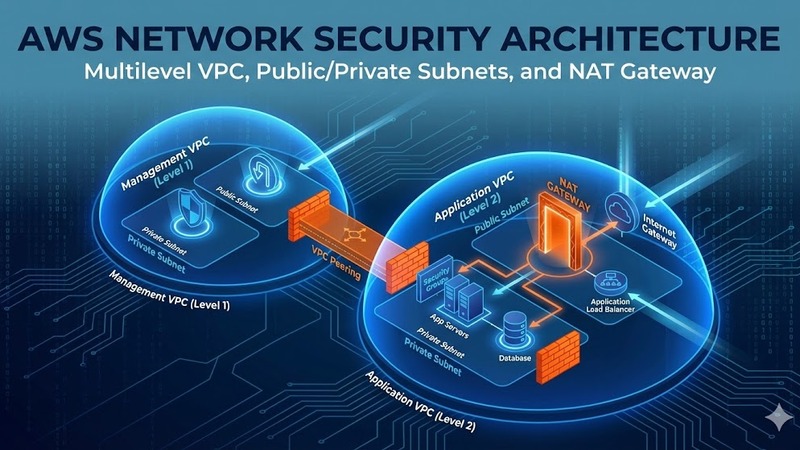
Multilevel network security architecture in AWS with VPC, NAT Gateway and perimeter protection
Design and implementation of enterprise AWS security architecture with multilevel VPC, public and private subnet separation, NAT Gateway for controlled outbound traffic, multi-AZ deployment for high availability, AWS Shield for DDoS protection, AWS WAF for application security and comprehensive backup strategy with AWS Backup.
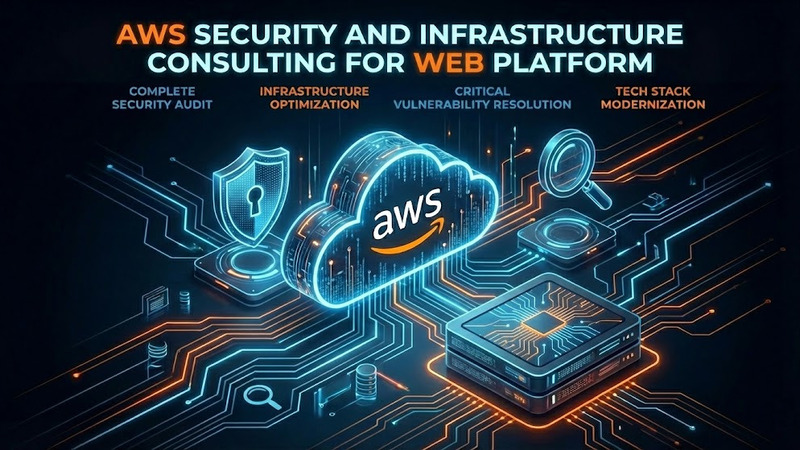
AWS Security and Infrastructure Consulting for Web Platform
Complete security audit and AWS infrastructure optimization for a web application platform, detecting and resolving critical security vulnerabilities, implementing monitoring systems, and modernizing the technology stack.
Comments
Submit comment