Linux System Administration
Expert Linux administration, performance tuning, and enterprise-grade infrastructure management
- What is Linux System Administration?
- Linux system administration is the practice of managing, maintaining, and securing Linux-based servers and infrastructure. It encompasses server installation and configuration, security hardening, performance tuning, backup strategies, automation with scripts and tools like Ansible, monitoring and alerting, and ensuring high availability. Linux powers over 90% of cloud infrastructure and is the foundation of modern web hosting, containerization, and enterprise computing environments.

Master your Linux infrastructure with 20+ years of production experience managing enterprise systems. I specialize in high-performance Linux environments across RedHat/Rocky/AlmaLinux, Debian/Ubuntu, and custom distributions, optimizing every layer from kernel tuning to application performance. My expertise includes building 99.99% uptime clusters, implementing automated system management at scale, and architecting resilient infrastructure that handles millions of requests daily.
I deliver complete system automation using Ansible, Puppet, and custom scripts, ensuring consistent configurations across hundreds of servers. My performance tuning expertise covers kernel optimization (sysctl, scheduling, memory management), storage optimization (LVM, RAID, filesystem tuning), network performance (TCP/IP stack optimization, eBPF), and application-level optimizations. I implement high availability clusters with Pacemaker/Corosync, DRBD replication, and load balancing using HAProxy and Nginx.
Whether you need enterprise system hardening, disaster recovery planning, or infrastructure modernization, I provide battle-tested solutions. From bare metal to cloud (AWS, GCP, Azure), I architect Linux environments that are secure, performant, and maintainable. My approach combines deep technical knowledge with operational excellence, delivering systems that just work.
Performance Tuning & Optimization
- Kernel tuning (sysctl, CPU scheduling, memory management, I/O)
- Storage optimization with LVM, RAID, filesystem tuning (ext4, XFS, Btrfs)
- Network performance optimization (TCP/IP stack, eBPF, XDP)
- Application profiling and bottleneck identification (perf, strace, eBPF)
High Availability & Clustering
- Pacemaker/Corosync clusters for 99.99% uptime
- DRBD for real-time block device replication
- HAProxy & Nginx load balancing and reverse proxy
- GlusterFS, Ceph for distributed storage
Automation & Configuration Management
- Ansible playbooks for infrastructure automation
- Puppet/Chef for large-scale configuration management
- Custom Bash/Python scripts for specific automation tasks
- Systemd service management and custom unit files
Security Hardening
- SELinux/AppArmor mandatory access control implementation
- Firewall configuration (iptables, nftables, firewalld)
- CIS benchmarks compliance and security auditing
- Patch management and vulnerability remediation
Monitoring & Observability
- Prometheus & Node Exporter for metrics collection
- Grafana dashboards for system visualization
- Centralized logging (rsyslog, journald, ELK stack)
- Alerting systems (Nagios, Zabbix, Prometheus Alertmanager)
Backup & Disaster Recovery
- Backup strategies (rsync, Bacula, Restic, duplicity)
- Snapshot management (LVM, Btrfs, ZFS snapshots)
- Disaster recovery planning and failover testing
- Off-site backups to cloud (S3, Azure Blob, GCS)
Linux System Administration Tools & Technologies
Linux Distributions
System Tools
Security & Monitoring
Storage & Filesystems
Business Impact of Expert Linux Administration
Achieve 99.99% uptime with high availability clusters and failover
Reduce infrastructure costs by 30-50% through performance optimization
Automate repetitive tasks saving 20+ hours per week for your team
Harden systems against security threats with enterprise-grade protection
Improve application performance by up to 300% with kernel tuning
Ensure business continuity with robust backup and disaster recovery plans
Why Work With Me
Direct access to 20+ years of hands-on expertise
20+ Years Experience
Two decades of real-world experience designing, building, and optimizing production systems for startups and enterprises alike.
AWS & GCP Certified
Certified cloud architect with deep expertise in AWS and Google Cloud Platform, ensuring best practices and optimal solutions.
Hands-On Technical Expert
I write code, configure infrastructure, and solve problems directly—no delegation to junior staff or outsourcing.
Proven Results
Track record of reducing infrastructure costs by 40-60%, improving performance, and delivering projects on time.
Direct Communication
Work directly with me—no account managers or intermediaries. Clear, technical discussions with fast response times.
Bilingual Support
Fluent in English and Spanish, serving clients across Europe, Americas, and worldwide with no communication barriers.
Frequently Asked Questions
Common questions about Linux administration services
Linux system administration encompasses the complete management of Linux-based servers and infrastructure. This includes server installation and configuration, user and permission management, security hardening, performance tuning, backup strategies, monitoring, troubleshooting, and maintaining high availability. A Linux administrator ensures your systems run reliably, securely, and efficiently, handling everything from kernel updates to application deployment and disaster recovery planning.
Linux servers offer significant advantages for most business workloads: lower total cost of ownership with no licensing fees, superior stability with uptimes often exceeding years without reboots, better security with faster vulnerability patching and a smaller attack surface, and greater flexibility for customization. Linux dominates in web hosting, cloud computing, and containerization. Most of the internet runs on Linux, and major cloud providers optimize their infrastructure for Linux workloads, often resulting in 20-40% cost savings compared to Windows alternatives.
My management process follows industry best practices: initial assessment of your infrastructure, documentation of current state, implementation of monitoring and alerting, security hardening following CIS benchmarks, and establishing automated backup procedures. Ongoing management includes proactive monitoring, regular security patches, performance optimization, capacity planning, and incident response. I use infrastructure-as-code with Ansible to ensure consistent, repeatable configurations across all servers, with full documentation and runbooks for your team.
Any organization running production workloads on Linux benefits from professional administration: e-commerce platforms requiring high availability, SaaS companies needing scalable infrastructure, financial services with strict security requirements, healthcare organizations with compliance needs, media companies handling large data volumes, and startups wanting to focus on product development rather than infrastructure. Companies without dedicated Linux expertise or those seeking to reduce operational overhead find particular value in managed Linux services.
Pricing models vary based on scope and complexity: per-server monthly fees typically range from $50-500 depending on criticality and services included, hourly consulting rates for specific projects, or fixed monthly retainers for comprehensive management. Linux often provides significant cost savings versus Windows through eliminated licensing costs, better resource efficiency allowing smaller server sizes, and reduced security incident costs. I provide custom quotes based on your specific infrastructure and requirements.
Timeline depends on complexity: a new server can be production-ready in 1-3 days with proper hardening and configuration. Migrating from Windows to Linux typically takes 2-6 weeks, including application compatibility assessment, data migration planning, testing, and staged cutover. Complex migrations involving multiple servers, databases, and applications may take 2-3 months. I provide detailed project timelines during the assessment phase, with clear milestones and minimal disruption to your operations.
Basic requirements include SSH access to your servers (or credentials to provision new ones), documentation of existing applications and services, understanding of your business requirements and SLAs, and a point of contact for decision-making. For cloud environments, appropriate IAM permissions for infrastructure management are needed. I can work with existing infrastructure or help you design and provision new servers on AWS, GCP, Azure, or bare metal providers. All access is secured with key-based authentication and audited.
In-house administration requires hiring experienced Linux engineers (salary $80K-150K+), investing in training, tools, and on-call coverage. Managed services provide expert-level administration at a fraction of the cost, with 24/7 coverage and no single-point-of-failure when staff leave. You get immediate access to deep Linux expertise, established processes, and enterprise-grade tooling without building internal capabilities. Many companies use a hybrid approach: managed services for infrastructure while internal teams focus on application development.
Typical outcomes include achieving 99.9-99.99% uptime through proper architecture and monitoring, reducing security incidents through proactive hardening and patch management, improving performance by 30-300% through kernel and application tuning, and cutting operational costs through automation and optimization. Clients typically see faster issue resolution, reduced emergency escalations, better compliance posture, and freed internal resources. I provide regular reports tracking key metrics and continuous improvement recommendations.
I offer customized SLAs based on your requirements: response times from 15 minutes for critical issues to 4 hours for low-priority requests, uptime guarantees up to 99.99% for properly architected systems, and defined escalation procedures. SLAs include proactive monitoring, regular maintenance windows, and documented incident response procedures. For critical systems, I implement automated failover and recovery to meet aggressive availability targets. All SLA terms are clearly defined in service agreements with measurable metrics.
The process begins with a free initial consultation to understand your infrastructure, challenges, and goals. I then conduct a comprehensive server audit covering security posture, performance baselines, backup status, and improvement opportunities. You receive a detailed assessment report with prioritized recommendations and a proposal for ongoing services. Onboarding typically takes 1-2 weeks, including documentation, monitoring setup, and knowledge transfer. Contact me to schedule your initial consultation.
I support all major enterprise distributions: Red Hat Enterprise Linux (RHEL), Rocky Linux, and AlmaLinux for enterprises requiring commercial support; Ubuntu Server for cloud-native workloads with excellent AWS/GCP/Azure integration; Debian for maximum stability; and Amazon Linux for AWS-optimized deployments. Distribution choice depends on your specific needs—vendor support requirements, package availability, team familiarity, and application compatibility. I help evaluate options and can manage mixed-distribution environments.
Related Projects
Real-world implementations demonstrating this expertise

AWS Infrastructure Optimization for Virtway Metaverse - Aurora Serverless v2 and intelligent autoscaling
Highly scalable AWS architecture designed to support virtual events with extreme traffic spikes for Virtway Metaverse. Implementation of Aurora Serverless v2 with multi-layer hybrid autoscaling, optimized RDS Proxy and advanced scaling strategies that reduced latency and costs while ensuring availability during connection avalanches.
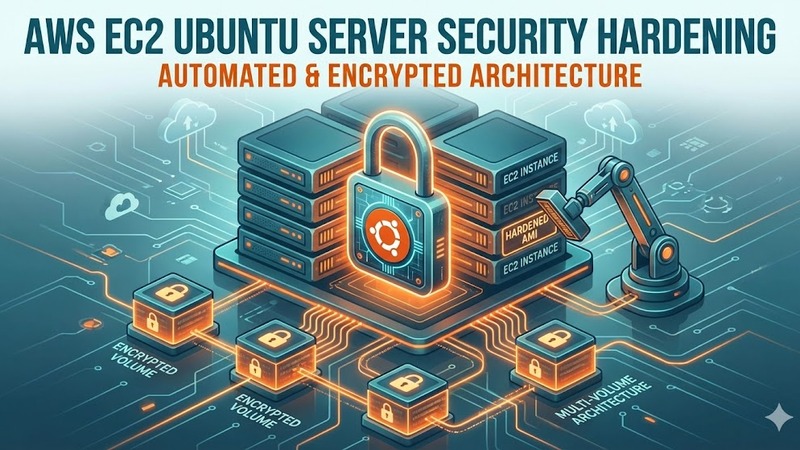

AWS EC2 Ubuntu Server Security Hardening with Multi-Volume Architecture
Automated security hardening solution for AWS EC2 Ubuntu servers implementing encrypted multi-volume architecture, system-level security controls, SSH hardening, user access management and comprehensive monitoring. Repeatable AMI-based deployment process for multiple production environments.
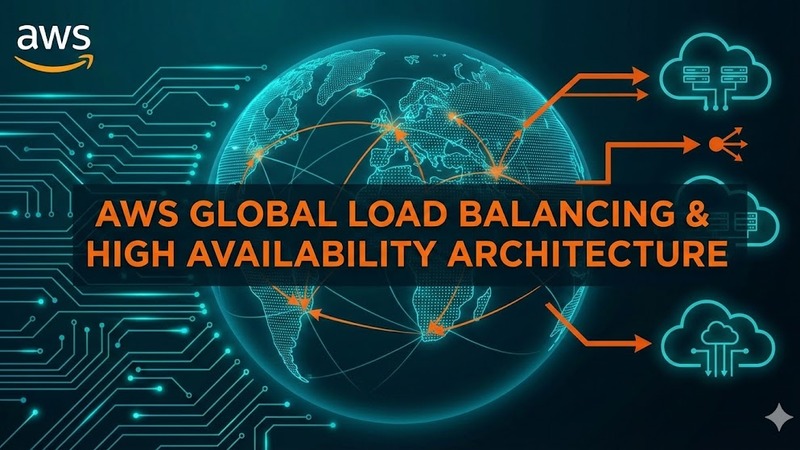

AWS Global Load Balancing and High Availability Architecture
Designed and implemented multi-region, highly available infrastructure leveraging AWS Global Accelerator and Application Load Balancers to achieve optimal latency, geographic distribution, and automatic failover capabilities across multiple availability zones.

Your expert
Daniel López Azaña
Cloud architect and AI specialist with over 20 years of experience designing scalable infrastructures and integrating cutting-edge AI solutions for enterprises worldwide.
Learn more